Amalfi or Puglia: choosing a coast for ten days
Two stretches of southern Italy that suit opposite kinds of traveller. How to tell which one you are.
People ask this as though it were a question about beauty. It is a question about how you like to spend a day.
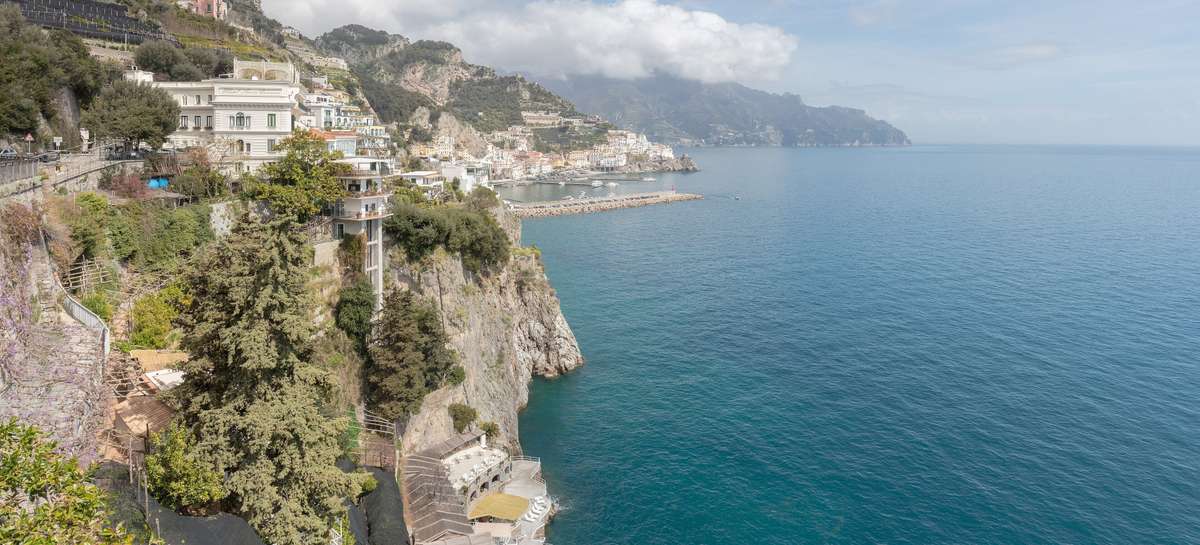
The Amalfi Coast is vertical. Towns hang off cliffs, the one road is narrow and slow, and you get about on foot, by ferry and by stairs. Puglia is horizontal. It is long, flat and agricultural, the towns are an easy drive apart, and without a car you will see very little of it. Almost everything else follows from that difference.
The Amalfi Coast
It is small. The whole coast road runs for about fifty kilometres, and most visitors divide their time between three or four places: Positano, Amalfi, Ravello on its ridge above the sea, and quieter Praiano between them.
What it does well is drama. The views are the famous ones for good reason, and a day that consists of a boat, a swim and a long lunch on a terrace is hard to improve on. Capri and Pompeii are both within reach as day trips.
What it asks of you is patience and a strong pair of legs. In July and August the road clogs and the ferries fill. A car is a liability: parking is scarce and expensive, and the bus is often quicker. Hotels cost more here than almost anywhere else in the south, and many of them close for the winter.
It suits a shorter stay. Five to seven nights is plenty for most people, and May, early June and late September are kinder than high summer.
Puglia
Puglia is the heel of the boot, and it is large. From the airport at Bari to the tip of the Salento peninsula is a drive of more than three hours, so a good trip here uses two or three bases, not one.
A common shape is to begin in Lecce, a baroque city built of honey-coloured stone, move to a farm estate in the Valle d’Itria among the olive groves and the conical trulli houses, and finish by the sea. The Adriatic side is rocky, with swimming from ledges and coves. The Ionian side has the long sandy beaches.
What it does well is space, food and value. You stay on a masseria, a fortified farm turned hotel, with a pool and a kitchen garden, and you eat extremely well for less than you would pay on the Amalfi Coast. White hill towns such as Ostuni are a short drive away, and the roads are easy.
What it asks of you is a willingness to drive, and an acceptance that the scenery is quiet. Puglia is olive trees and stone walls and wide light. If you need a cliff to feel that you are on holiday, it may underwhelm you.
It suits a longer stay. Ten nights is about right.
How to choose
Choose the Amalfi Coast if:
- You do not want to drive
- You want the view from the postcard, and you are content to share it
- You have a week or less
- You can travel in May, June or September
Choose Puglia if:
- You are happy with a hire car
- You care more about lunch than about the view from it
- You have children, or you simply like room around you
- You have ten nights and want to unpack only three times
Can you do both?
You can. The Valle d’Itria is a little over four hours by road from the Amalfi Coast, and the cave city of Matera sits conveniently on the way and is worth a night. But be honest about what you gain. A ten-night trip split between the two gives you four days of each and two days in a car. We would sooner plan one of them properly, and save the other for another year.
If you would like a second opinion on which suits you, tell us how you like to travel and we will give you a straight answer.